
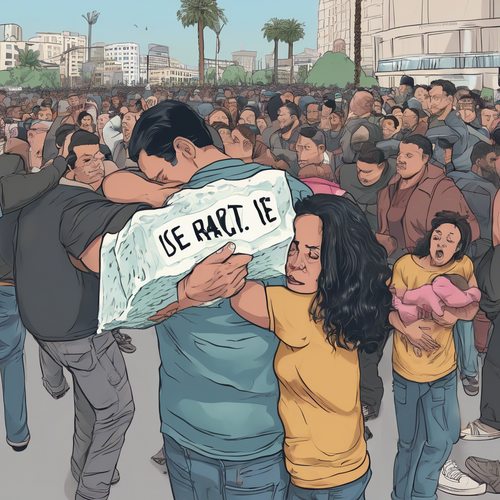
ICE Raids in Los Angeles Spook Homebuilding Industry Amid Labor Shortages
As the sun rises over Los Angeles, so too do the concerns brewing in the city’s bustling construction sites. Recent Immigration and Customs Enforcement (ICE) raids have sent shockwaves through the homebuilding industry, already grappling with crippling labor shortages. With thousands of undocumented workers contributing to California’s housing market, the uncertainty surrounding these raids creates a perfect storm for an industry that can ill afford to lose even a fraction of its workforce. 🏗️🏡
The Labor Crunch: A Growing Concern
The homebuilding industry in California has been operating on a razor-thin margin of available labor for years. A combination of stringent immigration policies, a lack of skilled workers, and a housing demand that far outstrips supply has left builders scrambling. According to recent data from the California Building Industry Association, approximately 30% of California’s construction workforce is undocumented, a statistic that underscores the critical role immigrant labor plays in the state’s homebuilding sector.
“We are in a crisis mode,” said Rick Templin, a contractor in Los Angeles. “If we lose workers from these raids, it will directly impact our ability to meet housing demands.” 😭
The Impact of ICE Raids
The implications of ICE raids are vast, affecting not just the workers but the entire construction ecosystem. Builders are faced with costly delays, project cancellations, and an increase in labor expenses as they are forced to hire from a smaller talent pool. Experts estimate that nearly 40% of scheduled projects could face disruptions due to labor shortages caused by these raids.
- Delays and Increased Costs: Builders are often forced to pay higher wages to attract legal workers, leading to increased project costs and longer timelines. 🕒
- Skill Gaps: Many skilled trades, such as electricians and plumbers, are increasingly difficult to fill. The rapid exit of experienced workers creates a significant skill gap that entry-level employees cannot fill quickly enough.
- Housing Market Pressure: The struggles within the homebuilding industry exacerbate the already tense housing market, leading to higher prices and tighter inventory for potential buyers.
The Broader Economic Implications
Beyond the immediate effects on construction, the ramifications of ICE raids ripple through the economy. California’s housing crisis is simultaneously a labor crisis. More than 1.5 million homes are needed statewide to meet demand, but with a dwindling workforce, the prospect of building these homes fades further into the distance. The National Association of Home Builders reports that completion rates for new homes are down by nearly 20% compared to just five years ago.
A Fight for Workers’ Rights
In response to the climate of fear, advocacy groups are increasing efforts to protect vulnerable workers. Legal aid providers are stepping in to offer assistance for those affected by the raids, while labor unions advocate for comprehensive immigration reform that would provide pathways to legal status for undocumented workers. The message is clear: the future of California’s homebuilding sector depends not just on bricks and mortar, but on the lives of the workers who construct them.
“Building homes shouldn’t come at the cost of human lives,” stated Maria Gomez, a community organizer. “We need to protect our workers and ensure they can do their jobs without fear.” ✊
The Road Ahead: Balancing Enforcement and Workforce Needs
As the state grapples with enforcement and the very real need for labor, stakeholders in California must navigate a delicate balance. Public and private sectors are called upon to increase investment in workforce development programs, targeting skill gaps and preparing future generations for careers in construction. The potential socio-economic benefits of a robust, legal workforce far outweigh the short-term gains of stringent immigration enforcement.
Conclusion
The looming specter of ICE raids poses an undeniable threat to Los Angeles’ already fragile homebuilding industry amid labor shortages. As the industry stands at a crossroads, integrated efforts focusing on worker rights, immigration reform, and labor sustainability could ultimately pave the way for a more resilient construction sector. The question remains: will we rally for the human element of homebuilding, or allow fear to tear apart the very fabric of our communities? 🏘️🤔




Do ICE raids hinder or help the economy? Are labor shortages a bigger concern? Lets discuss! #ICEraids #LaborShortages #EconomicImpact
I think ICE raids are necessary to protect jobs for legal citizens. Its about time we prioritize our own people.
I think the ICE raids are causing chaos in the labor market. What do you guys think? Are there any solutions?
I disagree with the idea that ICE raids benefit the economy. Immigrant labor is essential for many industries to thrive.
I think ICE raids are necessary to enforce immigration laws and protect American workers. Its a complex issue with no easy solutions.
I believe ICE raids have a ripple effect on the entire economy, causing fear and instability in various industries. Lets discuss!
I think ICE raids are causing unnecessary fear and disruption in the community. Its time for a more humane approach.
I think ICE raids affecting the homebuilding industry is a serious issue that needs more attention and discussion. What do you all think?
I think ICE raids are causing unnecessary fear in the homebuilding industry. Its affecting the labor shortage and broader economic implications.
I believe ICE raids in L.A. are causing chaos in the homebuilding industry. Lets discuss the broader economic implications.