
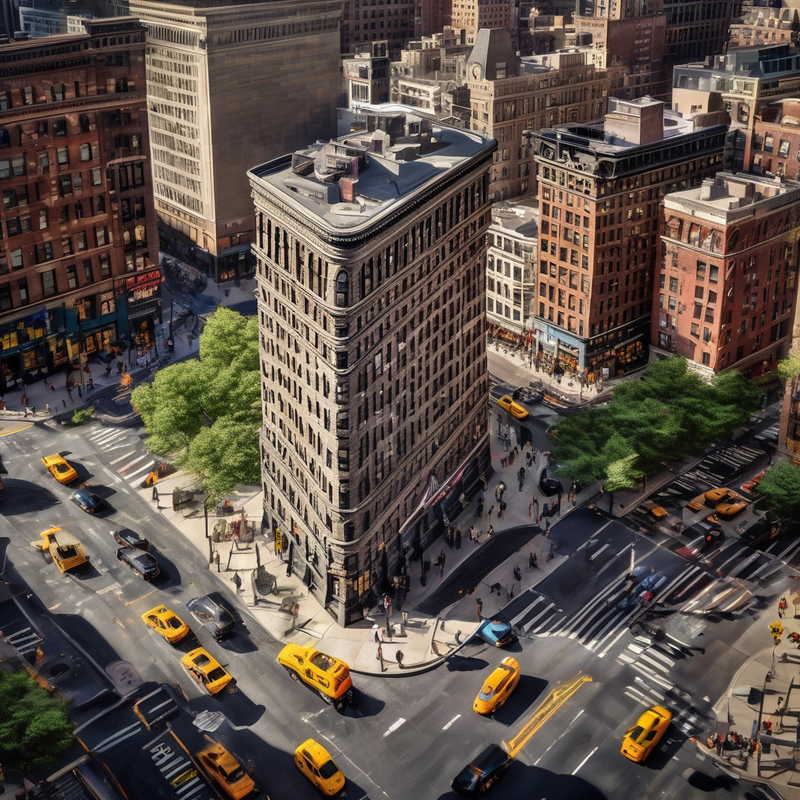
How much would you pay to live in the Flatiron Building? 🏙️💰
In a city that measures real estate by the square inch, the Flatiron Building emerges as an icon, a rich slice of history sandwiched between bustling streets in Manhattan. But as potential buyers ponder the price of residing within its triangular embrace, one must ask: How does one quantify the charm of living in a legendary edifice? 🤔
Built in 1902, the Flatiron has never been a mere residence. It is a historical monument, a gravity-defying architectural marvel that has hosted generations of residents, artists, and the curious alike. Yet, today, it operates like a real estate chess piece, a segment of the New York property market that speaks to both nostalgia and modern luxury. Pricing is as complex as the building’s façade; it’s a dance between its storied past and the giddy future of urban living.
A Tangled Tale of Value
It’s a paradox as curious as the building’s shape: how do you arrive at a price for such a storied location? According to current listings, average rents in the Flatiron District hover around $3,500 for a one-bedroom, while purchasing an apartment could cost well over $1.5 million. Consider the Flats, what the locals call their beloved building. They whisper of lofts with views that turn Manhattan into a glimmering sea of lights.
Yet, one must weigh these figures against the area’s ever-evolving market. The Flatiron reflects a robust mix of office spaces and high-end residences, embodying the bustle of New York life. This juxtaposition pulls potential buyers towards contrasting desires: do you seek heritage or modernity? Invest in history or profit from proximity? The Flatiron stands as an antithesis of sorts, where the old-world charm collides—sometimes jarringly—with the sleek new skyline. 🏢⚖️
Emotion or Investment?
With the cost of living in Manhattan akin to trading your firstborn for a cup of coffee, the question looms—ask yourself: would you pay a premium just to reside in a slice of architectural lore? Some would argue that living at the Flatiron is equivalent to holding a piece of history, akin to owning a relic that echoes the stories of urban plight, artistic expression, and economic ambition. They equate its walls to the palpable buzz of inspiration, much like carrying a piece of the city’s heartbeat in your pocket. ❤️🗽
Yet, irony abounds when we consider the realities of urban dwelling amidst such charm. Can echoing footsteps and bronzed doormen compensate for the incessant cacophony of city life? Or do the soaring ceilings and historical detail merely mask the mundanity of navigating through shared elevators and crowded lobbies?
Rising and Falling: The Market Dynamics
Real estate trends suggest that the allure of the Flatiron may rise and fall with economic fluctuations. In thriving markets, buyers may be drawn to the prestige of such addresses, but during downturns, the irony of investment can sting. When fortunes dwindle, does a home rich in history still stand strong, or does its value crumble like an aging monument? 🏦📉
Take, for example, the average apartment price in the Flatiron District, which has exhibited resilience, occasionally akin to a defiant weed sprouting through concrete—its roots intertwined with the thriving cultural soil of New York. But, living in such a place is not just about the price tag; it’s the experience of life itself, flavored by the arts, fashion, and culinary delights that surround it.
The Final Price
So, how much would you pay to live in the Flatiron Building? Would it be a sum that reflects nostalgia, a grandiose homage to an architectural giant? Or would it be a financially prudent investment, replete with the promise of property appreciation? One wouldn’t purchase a painting merely for the canvas; the art comes alive through the narrative it tells and the emotions it stirs. In a city like New York, where every corner holds a story, the question of price transforms itself from mere economics to a quest for identity.
Ultimately, the Flatiron Building isn’t just a piece of real estate—it’s a tapestry woven with personal dreams, collective history, and tantalizing possibilities, making the true cost of living there impossibly intricate. The choice remains, an inviting puzzle tempting us to take one step closer to the legend. How much of yourself would you invest to call it home? 🔑✨




Is living in the Flatiron Building really worth the high cost? Emotions vs. investment returns – whats your take? 💸🤔
I think the true cost of living in the Flatiron Building goes beyond money. Emotions and history play a big role too! 🏙️💵 #DeeperValue
I think the emotional value of living in the Flatiron Building is priceless. Who cares about market dynamics when you get to call that iconic building home? 🌆💕
I cant believe people would pay crazy prices to live in the Flatiron Building! Emotion or investment? Whats your take? 🤔
Is the historical charm of the Flatiron Building worth the steep price tag, or is it just a trendy investment opportunity? 🤔💸
I think the emotional value of living in the Flatiron Building cant be measured solely by market dynamics. Its a piece of history!
I cant believe the prices to live in the Flatiron Building! Is it worth the steep cost or just a status symbol? 🤔🏙️💸
Is the prestige of living in the Flatiron Building worth the high cost, or is it just a status symbol? Lets discuss!
Is it worth the prestige to live in the Flatiron Building, or just a pricey gimmick? Lets debate! 🤔💸
I believe emotional attachment shouldnt dictate the price. Market dynamics and value should drive decisions. What do you think?
I think the emotional attachment to living in the Flatiron Building might be worth more than its monetary value. What do you all think? 🤔🏙️