
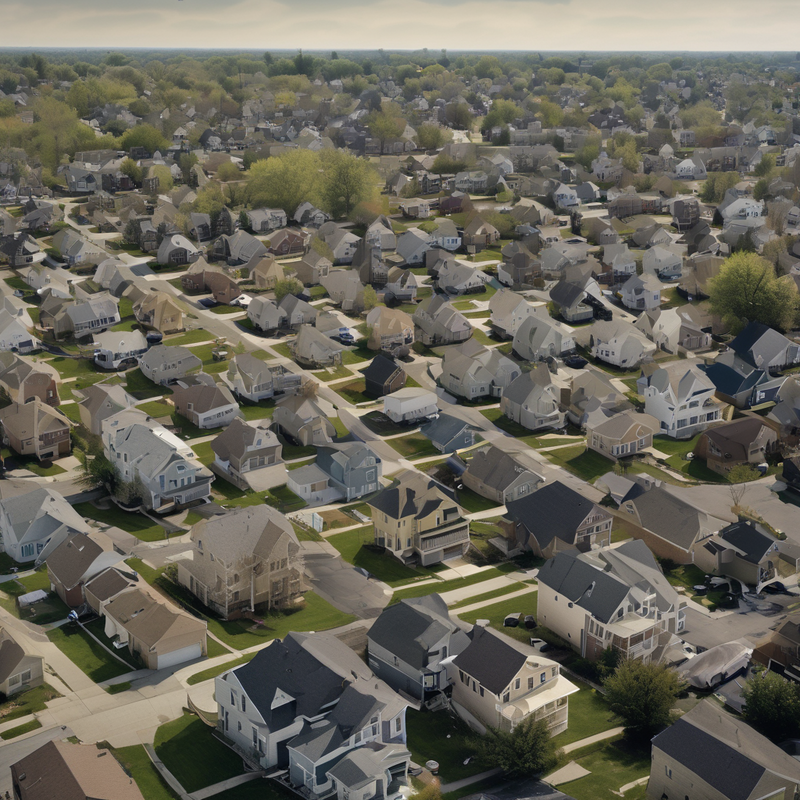
The Riskiest Markets for Homeownership: Navigating the Minefield 🏘️💣
The irony of homeownership is palpable: the very dream of owning a slice of the American pie often leads aspiring homeowners into a minefield of treacherous markets. As it turns out, location can be as volatile as the stock market’s wildest swings, and some of the riskiest places to buy a home are there to remind us of that. What makes these markets so perilous, you ask? Let’s dig deeper. 🧐
The Perils of High-Stakes Neighborhoods
When we speak of high-risk areas, we often conjure up visions of dilapidated buildings and crumbling infrastructure. Yet, the irony lies in the fact that some of the most sought-after neighborhoods can morph into risky territories overnight—like a flamboyant peacock strutting its stuff, only to be caught in a sudden storm. The juxtaposition of beauty and danger defines these markets, where the glistening facades may mask impending economic doom.
Consider cities like San Francisco and Los Angeles. One might visualize them as bastions of innovation and prosperity, with tech wealth streaming in like a raging river. Yet for many, this wealth only serves to inflate housing prices to dizzying heights. The market can pivot sharply, leaving unsuspecting buyers with mortgages akin to anchors dragging them toward the depths of debt. ⚓
Unstable Economies and Local Management
Not all that glitters is gold. Areas such as Detroit, still recovering from its tumultuous past, epitomize markets that can swing wildly due to local economies. Here lies a situation where the contrasting desires for revitalization and the tangibility of economic decline often clash. Homeownership could feel like a long-distance run—exciting at the outset, but it might leave you gasping for breath. 🏃♀️💨
- High unemployment rates: They can transform promising neighborhoods into ghost towns, where homes sit on the market longer than waiters at a slow diner. The median home price in some Detroit neighborhoods dropped below $50,000, an inviting figure that masks significant potential pitfalls.
- Economic instability: Cities like Philadelphia grapple with volatile economies and aging infrastructure, raising red flags for buyers who see only a lighthouse shining bright in the storm.
The Dangers of Speculation
Turning our gaze toward Florida, we find another paradox. The Sunshine State attracts snowbirds and retirees seeking tranquility but also draws in speculative investments that can lead to rapid market fluctuations. Like a carnival ride that jerks unpredictably, real estate here can swing wildly between lucrative gains and gut-wrenching falls.
Is Slow and Steady the Way to Go?
In a world where markets shout “Buy! Buy!” like an overly eager street vendor, could our best strategy be to find calm in the chaos? Perhaps the answer lies in recognizing which regions have foundations solid enough to withstand economic quakes. Markets that exhibit consistent demand rather than boasting fleeting trends often provide the safest haven for homeownership.
Long-Term Investments vs. Quick Gains
Markets in areas such as the Midwest often highlight this stability. With lower price points and steady growth, towns such as Columbus or Indianapolis reveal the beauty of less glamourous areas that grow like a sturdy oak tree rather than a flashy flower. Homeownership here may lack the immediate thrills but often provides a dependable return in the long run.
Preparing for Uncertainty
So, what’s the takeaway? In the ever-shifting landscape of real estate, navigating risky markets can feel like walking a tightrope—daunting yet alluring. Luckily, stability can often be found where you least expect it. Are you ready to put on your balancing act shoes? 🎪
The world of homeownership bears a striking resemblance to a riveting game of chess, where every move counts and miscalculations can be fatal. As you contemplate your next move, consider both the immediate costs and long-term implications. In a market teetering on the edge, knowing when to hold your cards close and when to play them can mean the difference between sinking or soaring.




I disagree! Homeownership is a gamble, but high-risk markets offer potential rewards. Its all about calculated risks! 💰🏡 #RiskVsReward
Who knew buying a house could be so risky? I never thought about the dangers of speculation in homeownership markets. Mind blown! 🤯🏠
I think the article really hits home on the risks of homeownership markets. Its like walking through a minefield out there! 🧐💥
I strongly believe that investing in unstable economies and high-stakes neighborhoods can be a risky move. Better safe than sorry!
I disagree with the idea that all neighborhoods with high homeownership risks are automatically bad investments. Each market is unique!
Isnt it wild how some neighborhoods are like ticking time bombs? Makes you wonder if homeownership is really worth the risk! 🔥🤔
I dont buy it! Homeownership is a solid investment, even in risky markets. Take the plunge and reap the rewards! 🏡💰
I think the article makes some good points about the risks of homeownership markets, but what about the benefits? Is it all doom and gloom?
I dont buy it – living on the edge can be thrilling! Risky neighborhoods bring character and excitement to homeownership.
Isnt it wild how some neighborhoods are high-stakes minefields for homeowners? Makes you rethink where you wanna settle down, huh?